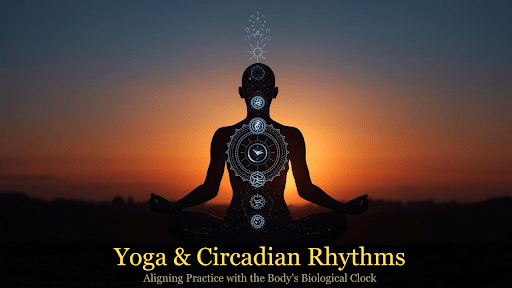
In an age of artificial light, irregular meals, digital overstimulation, and chronic stress, one of the most disrupted systems in the human body is time itself. Sleep disorders, metabolic dysfunction, mood instability, burnout, and even addictive behaviors increasingly share a common denominator: circadian misalignment.
Modern chronobiology calls it disruption of the circadian rhythm — the body’s intrinsic 24-hour biological clock. Classical yogic wisdom, centuries earlier, addressed the same phenomenon through the principles of dinacharya (daily rhythm), regulation of prāṇa, and disciplined alignment with natural cycles.
This convergence invites an important question:
Can yoga restore temporal intelligence in the human system?
Understanding the Biological Clock
The circadian rhythm is governed primarily by the suprachiasmatic nucleus (SCN), a cluster of neurons located in the hypothalamus. This master clock synchronizes peripheral clocks distributed across organs and tissues. It regulates:
- Sleep–wake cycles
- Cortisol and melatonin secretion
- Body temperature fluctuations
- Digestive efficiency
- Cognitive alertness and mood
Light exposure, especially through the retina, is the primary cue that entrains the SCN. Morning sunlight suppresses melatonin and activates cortisol in a healthy “cortisol awakening response.” Evening darkness allows melatonin secretion to initiate restorative sleep.
When this rhythm is disturbed — through late-night screen exposure, irregular sleep timing, erratic eating patterns, or chronic stress — physiological harmony begins to deteriorate.
Circadian dysregulation has been linked to:
- Depression and anxiety
- Obesity and insulin resistance
- Substance use vulnerability
- Cognitive decline
- Cardiovascular dysfunction
The body does not merely need sleep — it needs rhythm.
Modern lifestyles have significantly disrupted the human circadian rhythm — the intrinsic 24-hour biological clock that regulates sleep, hormonal balance, metabolism, and cognitive performance. Governed by the suprachiasmatic nucleus (SCN) in the hypothalamus, this system responds primarily to light exposure. Late-night screen use, irregular sleep patterns, and erratic eating schedules create circadian misalignment, contributing to insomnia, metabolic disorders, mood instability, and chronic stress. Increasingly, circadian disruption is recognized as a foundational factor in modern disease.
Long before chronobiology emerged as a scientific discipline, yogic traditions emphasized structured daily living through dinacharya — alignment with natural solar cycles. Waking during Brahma Muhurta, practicing at sunrise, consuming the main meal at midday, and gradually reducing stimulation after sunset were not merely cultural practices but physiological regulators. Yoga viewed time as a living rhythm influencing prāṇa, mental clarity, and systemic balance.
Morning yoga practices such as Sūrya Namaskāra and prāṇāyāma support the natural cortisol awakening response and enhance alertness. Exposure to early sunlight strengthens circadian entrainment by signaling the SCN through retinal pathways. When combined with breath regulation, these practices stabilize autonomic function and improve daytime energy. Thus, yoga serves as a behavioral entrainment tool that reinforces biological timing rather than opposing it.
Evening practices play an equally important role. Gentle forward bends, Bhrāmarī prāṇāyāma, and Yoga Nidrā activate parasympathetic pathways, enhance vagal tone, and support melatonin secretion. By reducing sympathetic overdrive, yoga facilitates smoother sleep onset and improved sleep quality. Research increasingly demonstrates yoga’s positive effects on heart rate variability, stress reduction, and insomnia symptoms, all of which are closely linked to circadian regulation.
Circadian misalignment is now associated with depression, obesity, addiction vulnerability, and cognitive decline. As neural networks and hormonal systems depend on rhythmic stability, irregular living disrupts both physiology and mental health. Structured yoga interventions may therefore serve as non-pharmacological tools to restore temporal coherence, particularly in populations exposed to chronic stress or shift-based lifestyles.
Yoga is not merely a set of postures but a discipline of timing. When practiced consistently at appropriate phases of the day, it becomes a method of synchronizing the nervous system with environmental cycles. In restoring alignment with sunrise, breath, and rest, yoga reestablishes harmony between biology and awareness — reminding us that health is sustained not only by effort, but by rhythm.